
Raiders of Gaza: Looting Palestine’s Past
Unveiling the heritage theft and colonial narratives surrounding Deir al-Balah’s ancient treasures. (Translated from Arabic)

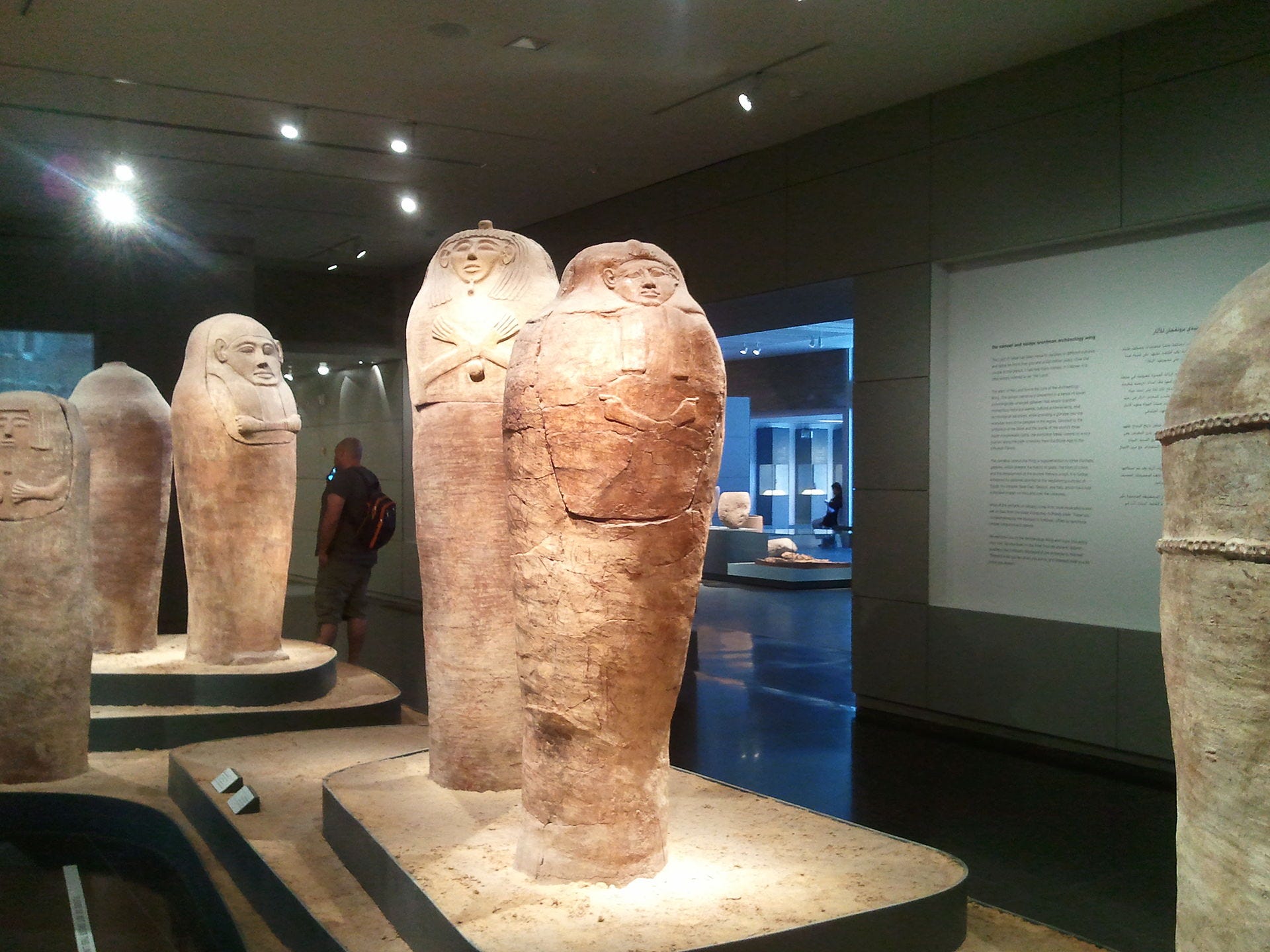
In an article titled “Gaza Sands Yield Lost Outpost of the Egyptian Empire,” published in National Geographic in December 1982, Israeli archaeologist Trude Dothan recounts the discovery of an Egypto-Canaanite cemetery buried for over three thousand years beneath the sands of Deir al-Balah, a city located in the middle of the Gaza Strip.
The story began when Dothan visited an antiquities shop in Jerusalem in early 1968. There, her attention was drawn to a clay coffin lid shaped like a human face. This lid was part of an anthropoid coffin—a coffin shaped like a human figure, made of stone or clay and modeled to resemble the deceased’s body within.
These coffins first appeared during Egypt’s Middle Kingdom, which spanned from 1975 BCE to 1640 BCE, as a simpler and more affordable imitation of the ornate and expertly crafted pharaonic coffins. Unlike the latter, which precisely matched the size of the deceased’s body, the stone and clay coffins did not necessarily conform to the body’s dimensions. Instead, they featured unique and diverse designs, often adorned with naturalistic and sometimes unusual motifs.
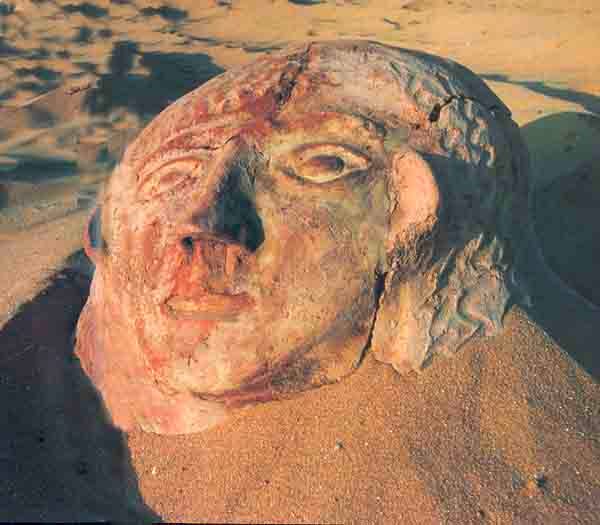
Upon noticing the clay face in the antiquities shop, Dothan was seized with curiosity and set out to trace the artifact’s origin. The antiquities dealers claimed that the coffin lid came from the hills near Hebron, an area known for its numerous looted tombs. However, the remnants of yellow sand clinging to the lid suggested to Dothan that its origin might instead lie in some ancient Egyptian cemetery in Gaza or Sinai. This led her to believe that the cemetery was unparalleled in its richness compared to any other burial site in the Levant or Sinai from that era.
