
‘Gideon’s Chariots’: Israel’s New Gaza Assault Cloaked in Biblical Symbolism

No modern political regime instrumentalizes religious narrative, iconography, and prophecy quite like Israel does. From naming bombs and AI kill-systems after biblical figures to distributing leaflets echoing divine warnings, the Israeli state fuses militarism and theology in a uniquely violent lexicon. Despite this, Western commentators continue to depict Israel as a secular outpost of modernity—a bastion of reason and science amid a region allegedly plagued by zealotry. Few call out the stark irony: Israel’s most devastating military campaigns are often draped in biblical language and executed with the self-righteousness of a holy war.
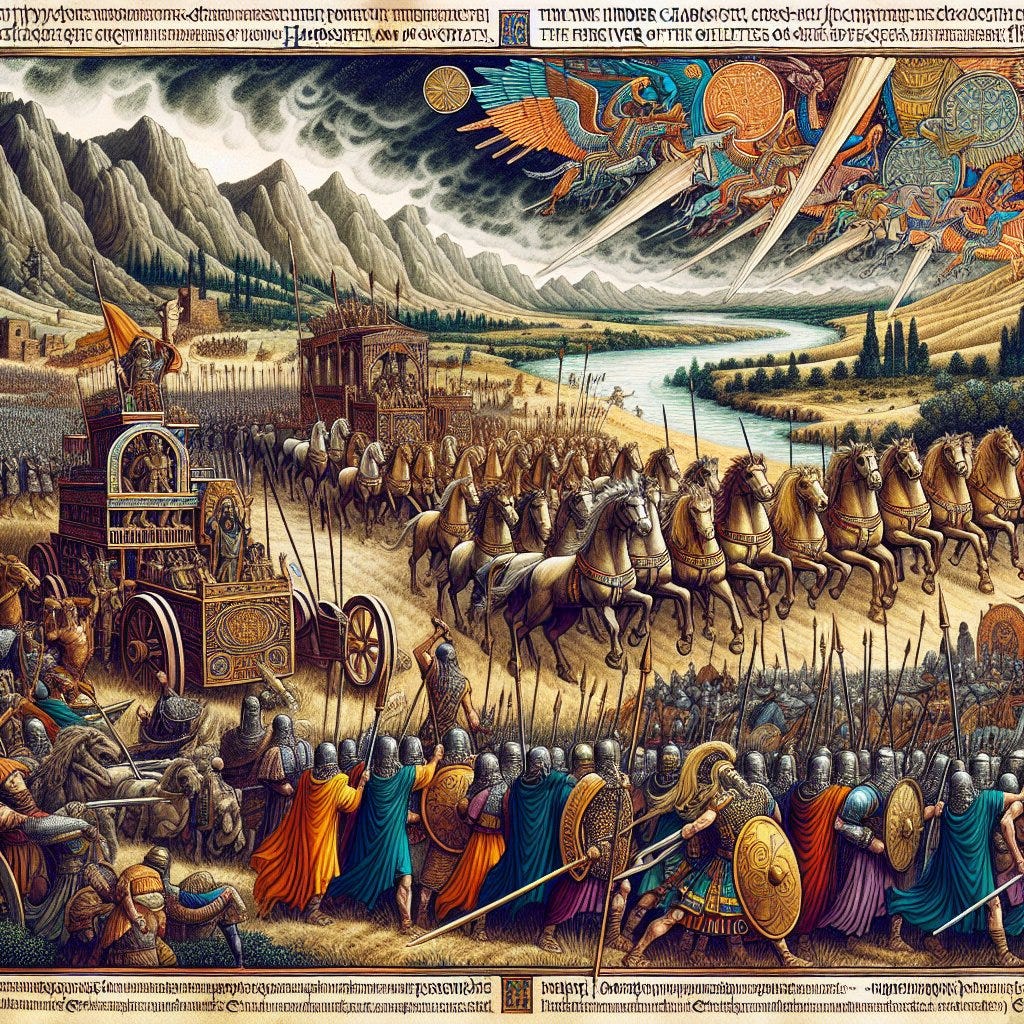
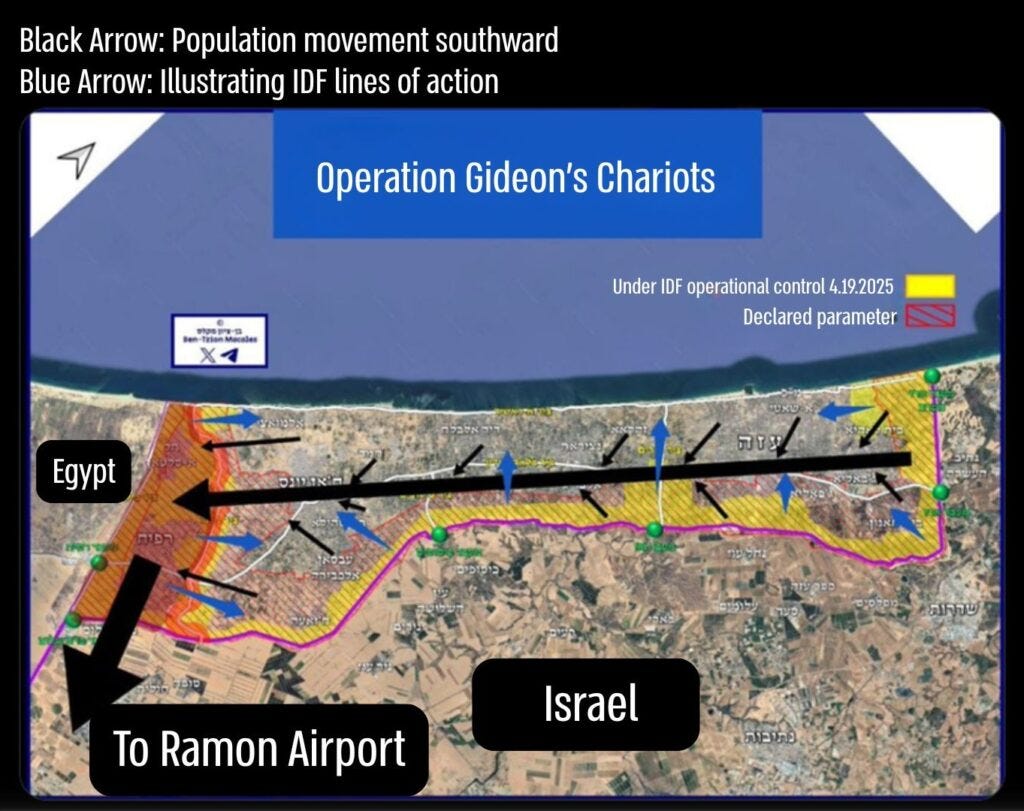
The most recent Israeli assault on Gaza, launched under the name "Operation Gideon’s Chariots," once again reveals this pattern of religious militarization. In the Book of Judges, Gideon leads a divine massacre against the Midianites, slaughtering 120,000 with God’s blessing. Chariots, in biblical and ancient Near Eastern warfare, symbolize unstoppable force and divine favor. By invoking this story, Israel does more than give its assault a dramatic name: it casts itself as the righteous agent of God's will and Gaza as the wicked enemy deserving of annihilation.
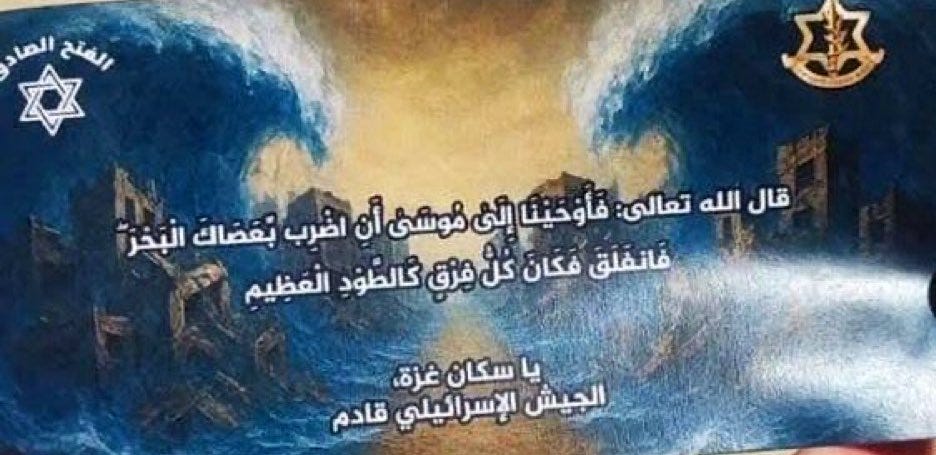
The symbolic allusions go beyond just names. In Deir al-Balah, residents reported Israeli planes dropping leaflets that mimic the Quranic telling of Moses parting the Red Sea. The leaflet reads: "So We revealed to Moses: Strike the sea with your staff, and it parted, and each part was like a great towering mountain... Residents of Gaza, the Israeli army is coming." The accompanying image shows a wave splitting Gaza in two, its buildings submerged beneath divine waters, with the logos of the IDF and Israeli government affixed. This is not just psychological warfare; it is spiritual theatre. Israel presents its military as a prophetic force, Gaza as Pharaoh’s Egypt—doomed and drowning.
This practice is not new. A 2010 study by Dalia Gavriely-Nuri titled "Rainbow, Snow, and the Poplar's Song: The 'Annihilative Naming' of Israeli Military Practices" analyzes over 200 Israeli operation names and finds three recurring strategies: naturalization, euphemization, and legitimation. Names like Pillar of Cloud (2012) or Arrow of Bashan (2024) are biblical references that obfuscate the human cost of war while tapping into spiritual grandeur. Gavriely-Nuri argues these naming strategies help manufacture public consent by divorcing the operations from their material consequences—civilian death, mass displacement, starvation.
Consider the 2012 operation "Pillar of Cloud" (translated to "Pillar of Defense" for foreign audiences), which refers to Exodus 13:21: "And the Lord went before them by day in a pillar of cloud, to lead them the way..." While the name was poetic in Hebrew, it was sanitized in English. The operation itself killed over 160 Palestinians in Gaza. Yet the name worked to obscure this violence under a divine metaphor.
Or take 2023's AI-targeting system named "Lavender," a reference to a biblical herb used in holy rituals. Despite its soft name, the system has been used to track and kill thousands of Palestinians, often with single-button approval based on vague metadata. Another AI system, "Gospel," implies divine sanction, righteousness, and moral clarity—even as its use reportedly involved dropping bombs on family homes to eliminate alleged militants. These names are designed not just to mystify, but to morally license violence.
Israel's "David's Sling" missile defense system is similarly framed. It invokes David's biblical defeat of Goliath, casting Israel as a perpetual underdog despite its overwhelming technological and military superiority. This narrative plays especially well in the U.S., where evangelical support for Israel is grounded in biblical prophecy and Christian Zionism. The symbolism resonates beyond borders—a call to the faithful, not just to the strategic.
Even older systems like "Jericho" missiles, named after the city allegedly destroyed by Israelite trumpets and divine will, follow this pattern. And then there's "Samson," Israel's remote-controlled gun turret system. In the biblical tale, Samson kills himself along with hundreds of Philistines in a final act of vengeance. The weaponized metaphor is chilling, especially in a context where Gaza is often framed as the modern Philistia.
The rhetoric also bleeds into political discourse. Prime Minister Netanyahu has repeatedly invoked Amalek —a biblical enemy God commanded the Israelites to annihilate entirely, including women and children. During the early stages of the war on Gaza, Netanyahu used this narrative to rally Israeli troops. This invocation was later submitted as evidence of genocidal incitement in South Africa’s ICJ case against Israel.
What all these examples show is that Israel’s war language is not just militarized; it is mythologized. The names of weapons, operations, and even surveillance systems are steeped in a theological lexicon that merges modern warfare with divine entitlement. Gaza is not just an enemy territory—it is a cursed land, its residents cast as ancient foes of Jewish destiny.
This ideological fusion has tangible consequences. It sanctifies indiscriminate violence. It frames war crimes as sacred duties. It neutralizes dissent by shrouding political critique in charges of heresy. And it appeals deeply to right-wing religious audiences both inside Israel and among its global allies.
There is also a practical function: psychological warfare. Leaflets evoking God, waves, and parting seas are meant to unnerve and humiliate. Names like Where’s Daddy?, reportedly used to track and target families, instill fear, especially during night raids when children are most vulnerable. According to reports, over half of Gaza’s war fatalities in the first month came from 1,340 families—many wiped out entirely while inside their homes.
Despite all this, major Western media outlets still resist calling out the religious zealotry embedded in Israeli conduct of war and politics. Figures like Bill Maher, who ridicule faith-based politics all over the world, continue to champion Israel as a secular, rational democracy. This contradiction is not just hypocritical; it is dangerous. It enables the very ideological extremism it claims to oppose.
Israel’s militarized theology is not limited to Gaza. In December 2024, Israel launched "Operation Arrow of Bashan" against Syria. Bashan, another biblical reference, was a land conquered by the Israelites after defeating King Og. Israeli strikes targeted Syrian ports, warships, and air defenses, destroying 80% of Syria’s military assets. Once again, the operation was framed as a holy conquest, a divinely ordained purification.
Whether in Gaza, Syria, or Lebanon, the pattern is clear: Israel casts itself as an eternal David, its enemies as new Philistines, Amalekites, Midianites, or Egyptians. This ancient worldview is then embedded into its software, its missiles, its battlefield propaganda. It is a war not just on people, but on meaning.
Naming a war "Gideon's Chariots" in 2025 isn't just tone-deaf; it's an act of ideological violence. It transforms genocide into divine spectacle. It weaponizes faith, history, and memory. And it does so with the complicity of an international audience that still refuses to read the symbols in plain sight.
This is not about belief. It is about the mobilization of belief for war. A faith-laced fantasy in which one state plays God, one people are cast as chosen, and everyone else is collateral. That is not security. That is sacrilege with state funding and satellite-guided missiles.
Of course. They compete in depravity
The self-righteousness of Israel wrapping itself in Biblical symbols…