
Decisive Hours: Gaza Ceasefire Negotiations at a Crucial Stage
Updates from Doha.

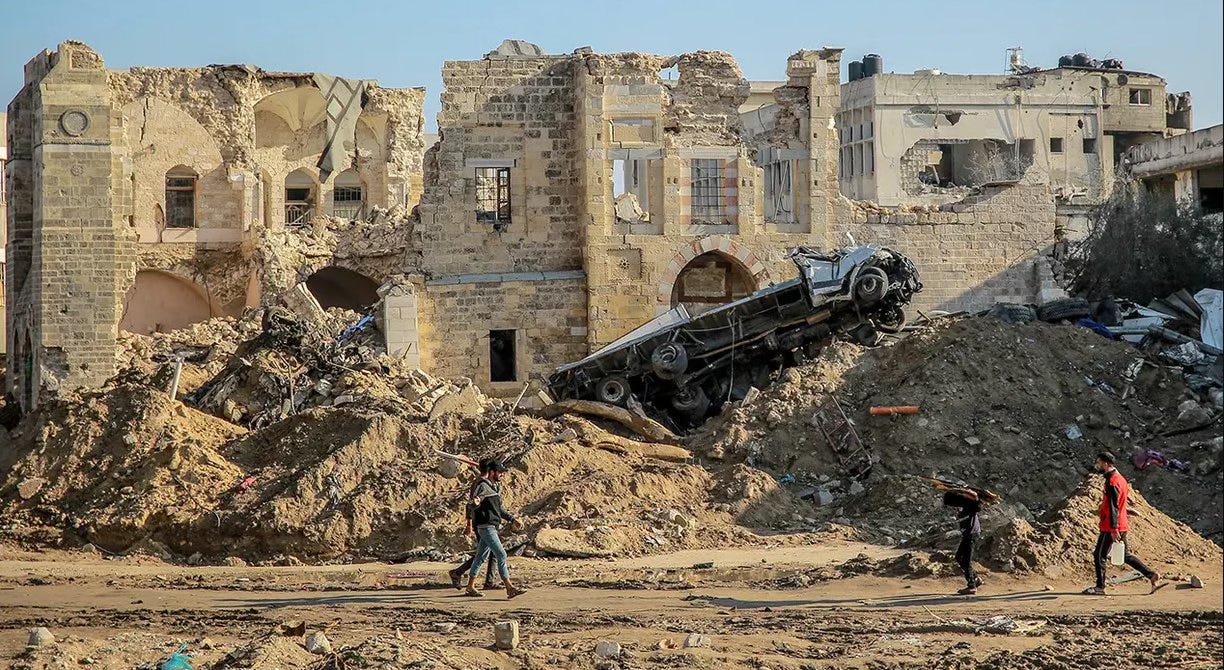
According to Al-Araby Al-Jadeed, ceasefire negotiations in Gaza and discussions about a prisoner exchange between Israel and Hamas have entered a critical phase. A high-ranking Israeli delegation, including Mossad chief David Barnea, is expected to arrive in Doha later today to finalize talks, following instructions from Israeli Prime Minister Benjamin Netanyahu.
Despite past instances where Netanyahu disrupted agreements at the last moment, this round of negotiations seems more promising, accompanied by hopeful signals and significant international involvement.
Key Positive Indicators According to Al-Araby Al-Jadeed’s Report:
Ceasefire Framework Finalized
A senior Hamas source revealed that the final framework for a ceasefire has been completed. Mediators are preparing to announce the agreement once Netanyahu’s envoy delivers Israel’s approval of the final amendments. A joint press conference involving Qatar, Egypt, and the United States is expected to reveal the agreement’s timeline and implementation details.
US Push for Progress
U.S. President-elect Donald Trump’s envoy, Steve Witkoff, arrived unexpectedly in Doha on Friday and visited Tel Aviv on Saturday. Witkoff delivered a message emphasizing Trump’s desire for a signed ceasefire before his inauguration in eight days. This urgency has added momentum to the negotiations.
Coordination with the Red Cross
An upcoming meeting between Israel’s Coordinator of Prisoners and Missing Persons, Gal Hirsch, and the President of the International Committee of the Red Cross, Mirjana Spoljaric, will discuss the terms of the prisoner release and the Red Cross’s role in facilitating the process.
Secrecy and Political Pressures
Netanyahu has kept key members of his security cabinet excluded from the details of the negotiations to avoid pressure from his coalition’s far-right factions. These factions have publicly opposed any deal that ends the war, with some threatening to dismantle the government over settlement ambitions in Gaza. According to Israeli Channel 12, “amid progress in deal negotiations: after [meeting with] Smotrich, Ben Gvir [was] also summoned for a meeting with Netanyahu.”
Incremental Progress
An unnamed senior Israeli official reported “slow but steady progress” over the past few weeks. Recent discussions included practical aspects of the deal, signaling an elevated level of seriousness. However, the official emphasized that finalizing the agreement still hinges on Hamas’s cooperation and the resolution of complex details.
Details of the Ceasefire Proposal
The proposed ceasefire includes a phased withdrawal of Israeli forces from Gaza’s Salah al-Din (Philadelphi) Axis:
Al-Araby Al-Jadeed reports that the proposed ceasefire agreement in Gaza outlines a full withdrawal from the Salah al-Din (Philadelphi) Axis by the conclusion of its implementation stages. The plan is structured in three phases: initially, Israeli forces would withdraw partially, followed by a phase where Israeli observation points remain in place. The final phase would see the complete withdrawal of the Israeli military on the last day.
With international mediators working to finalize the agreement, a press conference is anticipated soon to detail the agreement’s timeline. While optimism surrounds these negotiations, significant hurdles remain, particularly regarding political pressures on both sides and the complexity of implementing such a deal.
Circulating Draft of Agreement
Some sources indicate that the following is a draft of the anticipated agreement:
Phase One (42 Days):
Temporary Suspension of Military Operations:
Both sides will halt mutual military operations. Israeli forces will withdraw to areas near the border, away from densely populated regions, including the Gaza Valley (Netzarim axis and Kuwait Roundabout).
Limited Suspension of Aerial Activity:
Military and reconnaissance air activity will be temporarily suspended for 10 hours daily, and for 12 hours on days when captives and prisoners are released.
Return of Displaced Persons:
On Day 7 (after the release of seven captives), Israeli forces will fully withdraw from Al-Rashid Street eastward to Salah al-Din Street, dismantling all military posts and facilities. Displaced persons can return to their homes without carrying weapons, and humanitarian aid will flow freely via Al-Rashid Street starting from the first day.
On Day 22, Israeli forces will withdraw from the central Gaza area (Netzarim axis and Kuwait Roundabout) eastward to a location near the border, dismantling military facilities. Displaced persons in northern Gaza can continue returning to their homes without weapons.
Humanitarian Aid Delivery:
Starting from the first day, intensive aid shipments will be allowed, including 600 daily truckloads (50 of which will carry fuel). Fuel to restart power plants, equipment to clear rubble, and resources for hospitals, bakeries, and other essential services will also be delivered.
Prisoner and Hostage Exchange:
During this phase, Hamas will release 33 Israeli captives (alive or deceased) in exchange for a proportional number of Palestinian prisoners.
Specific conditions for release include:
Women and children (under 19) will be exchanged for 30 Palestinian prisoners each.
Elderly civilians (over 50) and injured captives will also be exchanged for 30 Palestinian prisoners each.
Female Israeli soldiers will be exchanged for 50 Palestinian prisoners each, with a mix of life-sentence and shorter-term inmates.
Terms for Released Prisoners:
Released Palestinian prisoners will not be re-arrested for the same charges, nor will they be required to sign any agreements as a condition for their release.
Negotiations for Phase Two:
Indirect negotiations will begin by Day 16 to agree on terms for Phase Two, including further prisoner exchanges and arrangements for Israeli soldiers and male civilians.
Infrastructure and Reconstruction Efforts:
Humanitarian services will be expanded across Gaza, including rebuilding electricity, water, roads, and sanitation systems.
Temporary shelters (60,000 units) and 200,000 tents will be introduced for displaced individuals.
Phase Two (42 Days):
Sustainable Calm:
A permanent ceasefire will begin before all remaining Israeli men (soldiers and civilians) are exchanged for an agreed number of Palestinian prisoners. Israeli forces will fully withdraw from Gaza.
Phase Three (42 Days):
Exchange of Remains:
The remains of deceased individuals held by both sides will be exchanged once identified.
Long-Term Reconstruction:
A 3- to 5-year plan for rebuilding Gaza’s infrastructure, homes, and public facilities will begin, supervised by Egypt, Qatar, and the United Nations.
Border Openings:
Crossings will be reopened to facilitate the movement of people and goods.
The agreement will be guaranteed by the United States, Egypt, and Qatar.
And if the mitary leave Gaza - if, insha’allah they leave - will they go to Jenin?
Looks good on paper, but I'll believe it when I see it...all the way through stage 4 completion. Neither Netandyahoo or the USA is in any way trustworthy and have lied repeatedly in the last year or more so it's more likely that they will change their minds and kill the deal before it's as they agreed.